

A multi-chemistry wetting platform for dry mortars, waterborne construction coatings, PCE admixtures, natural-stone epoxy impregnation and 100% solids floor systems. The grades are engineered to accelerate particle wet-out, improve additive dispersion and reduce defects such as cratering, crawling, fisheyes and dry voids.
MAKE THE LIQUID
GO WHERE IT MUST.
The supplied TDS defines the series as wetting and interfacial-tension modifiers for construction chemicals, natural-stone slab processing, epoxy coatings and dry-mix formulations.
LOWER CONTACT ANGLE.
ACCELERATE SPREAD.
Wetting agents reduce liquid surface/interfacial tension so the formulation can spread across high-energy or difficult low-energy surfaces, enter micro-pores and displace trapped air more efficiently.
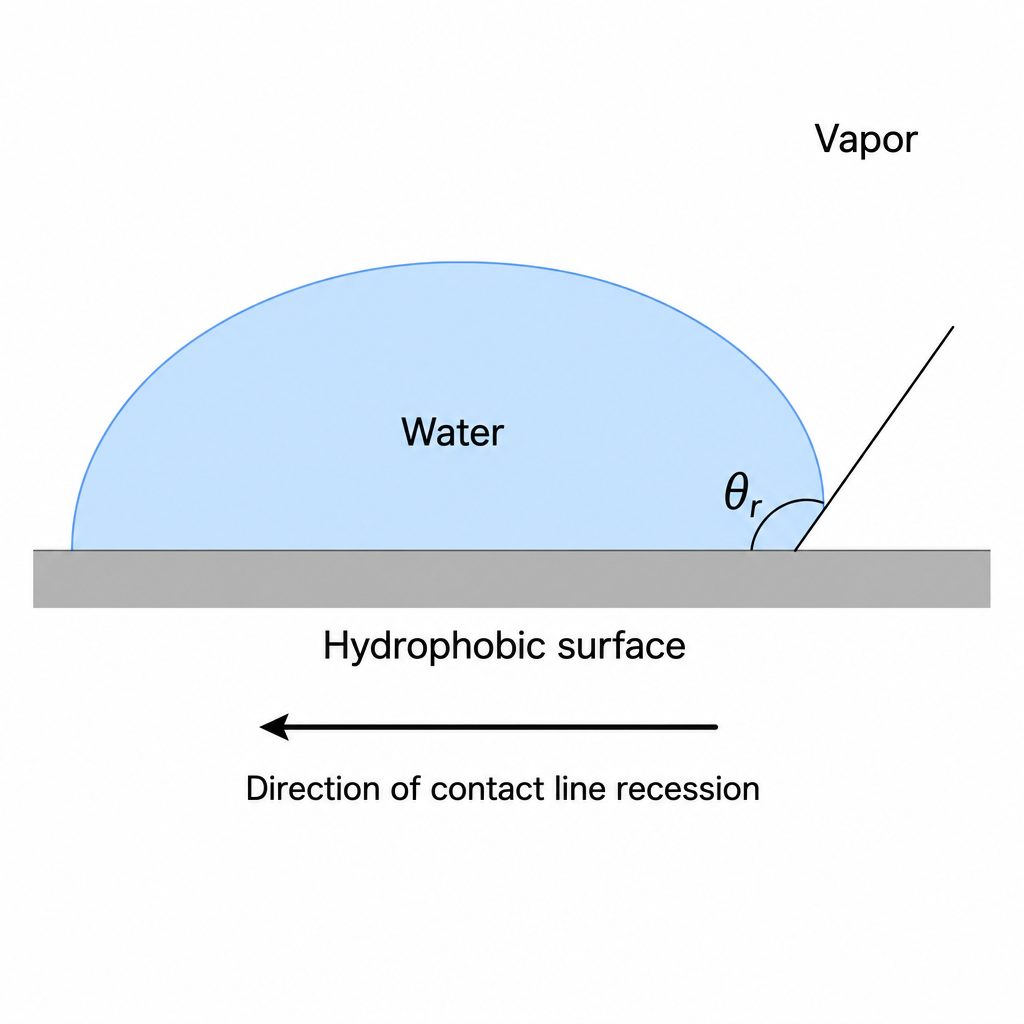
Contact Angle = A Practical Wetting Indicator
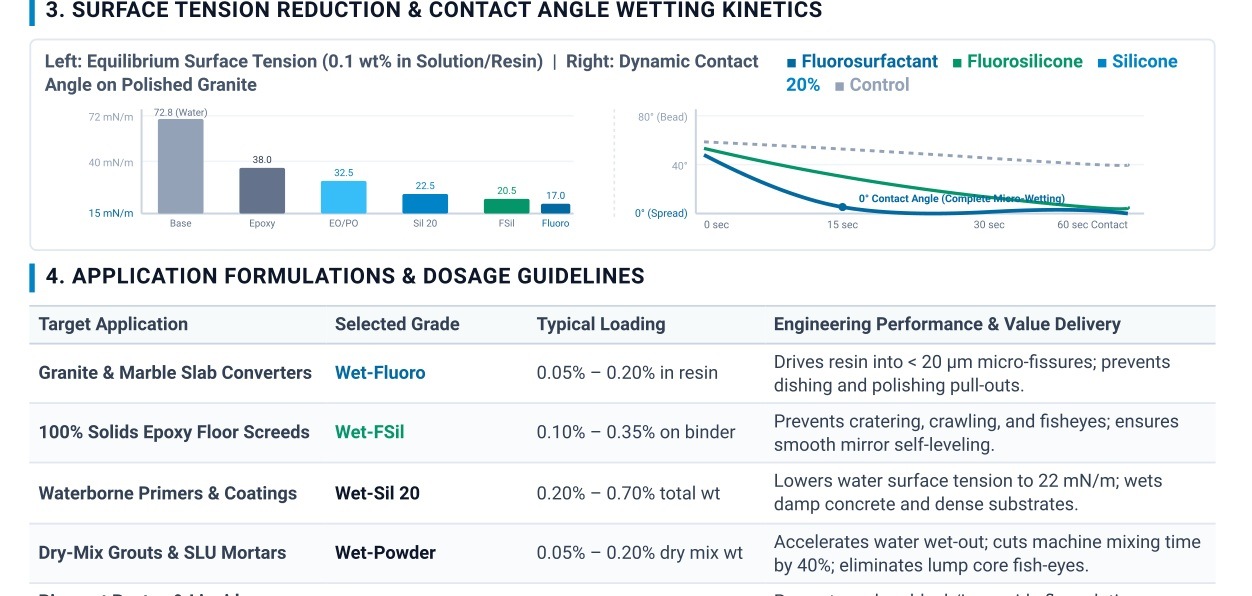
Lower contact angle means greater spreading. The TDS uses dynamic contact-angle reduction on polished granite to compare silicone, fluorosilicone and fluorosurfactant behavior.
THREE ROUTES TO BETTER WETTING
1 · Surface-Tension Reduction
Lower liquid surface tension to improve initial spread across concrete, stone, mortar or coating substrates.
2 · Capillary Penetration
Low interfacial tension promotes spontaneous resin draw into dense stone micro-fissures before cure.
3 · Dynamic Leveling
Silicone and fluorosilicone chemistries reduce surface-tension gradients that can produce craters, crawling or orange peel.
Dry-Mix Wet-Out
Powder wetting technology activates with gauging water to hydrate RDP/HPMC systems more quickly and reduce clumping.
SELECT BY MATRIX, NOT BY NAME
Each grade is positioned for a specific construction system and wetting mechanism.
WET-POWDER
Sulfonated organic active on silica carrier for rapid wet-out in cement, gypsum, HPMC/RDP mortars, self-levelers and grouts.
- 50 ±2% active
- 28–32 mN/m
- Fast dry-mix wetting
- Low-to-neutral foam
- 0.05–0.20% dry wt.
WET-SIL 20
Polyether siloxane emulsion for waterborne acrylics, coatings, concrete and masonry substrates.
- 20 ±1% active
- 21.5–24 mN/m
- Very high spray-line wetting
- Low self-controlling foam
- 0.20–0.80% wt.
WET-EOPO
EO/PO block copolymer for low-foam liquid dispersions, pigment grinds and PCE concrete admixtures.
- ≥99% active
- 31–34.5 mN/m
- Ultra-low / defoaming
- Solvent-free
- 0.10–0.50% wt.
WET-FLUORO
Short-chain fluorosurfactant for extreme capillary penetration into dense granite and marble resin systems.
- 40 ±2% active
- 16–18.5 mN/m
- Instant capillary action
- 15–45 cP
- 0.05–0.25% wt.
WET-FSIL
Fluoromodified polysiloxane for ultra-fast film spread, crater control and deaerating behavior on low-energy substrates.
- ≥98% active
- 19.5–22 mN/m
- Non-foaming / deaerating
- Solventless
- 0.10–0.35% wt.
PUT THE RIGHT CHEMISTRY IN THE RIGHT SYSTEM
The dosage regimes below follow the supplied TDS application table.
Wet-Fluoro
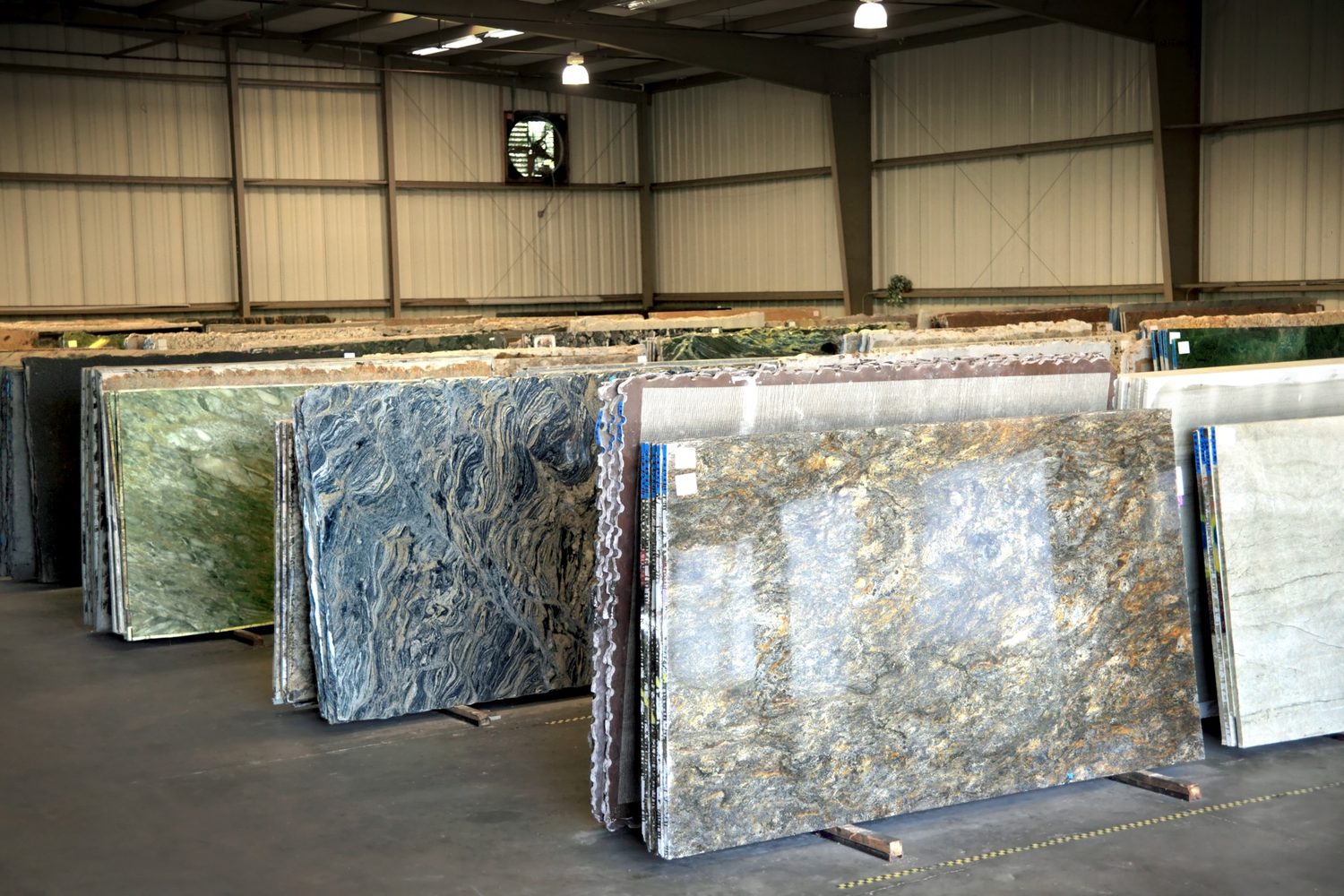
Granite & Marble Slab Converters
Drives resin into micro-fissures below 20 μm to reduce dishing and polishing pull-outs.
0.05–0.20% in resinWet-FSil
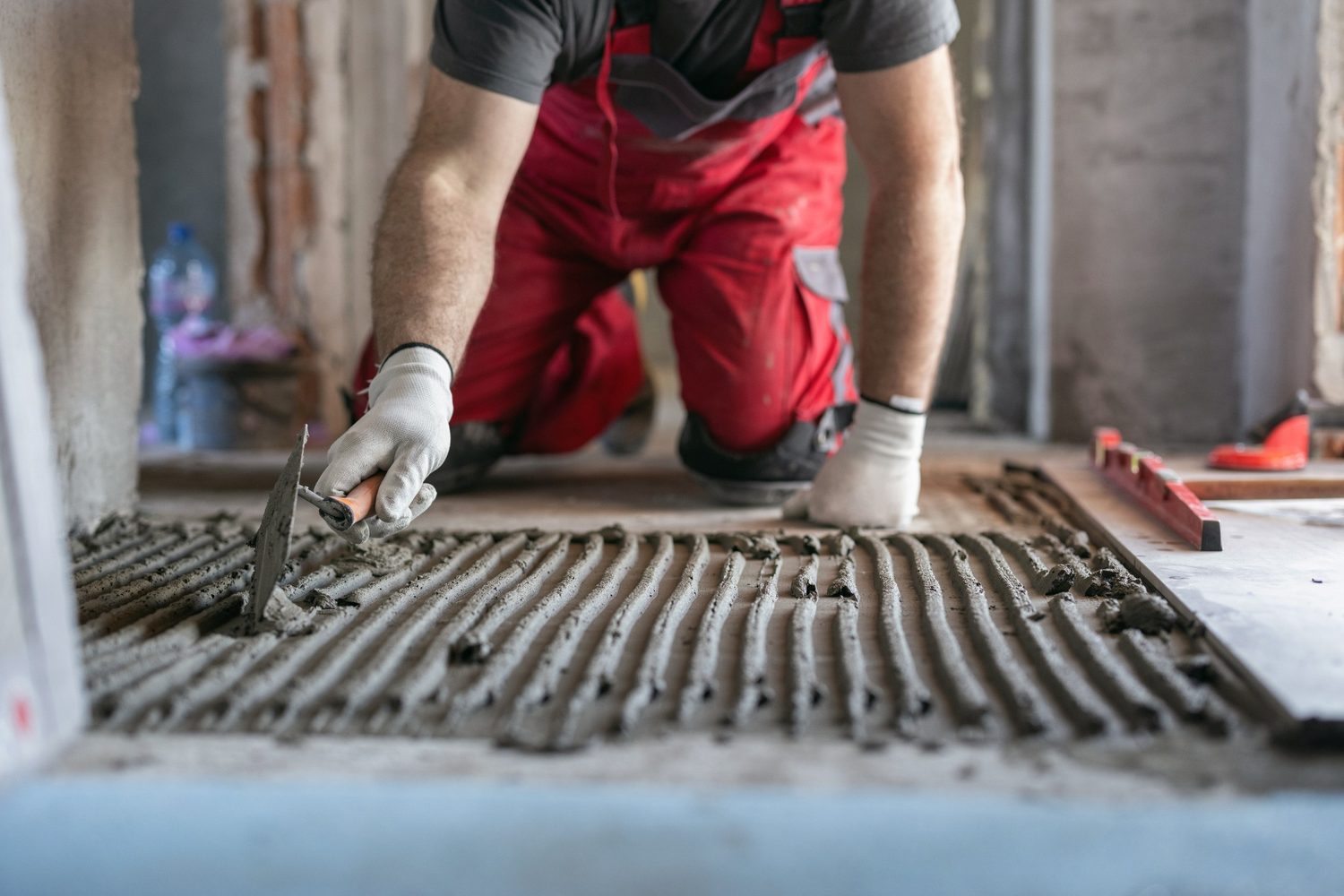
100% Solids Epoxy Floor Screeds
Controls cratering, crawling and fisheyes while supporting smooth, mirror-like self-leveling.
0.10–0.35% on binderWet-Sil 20
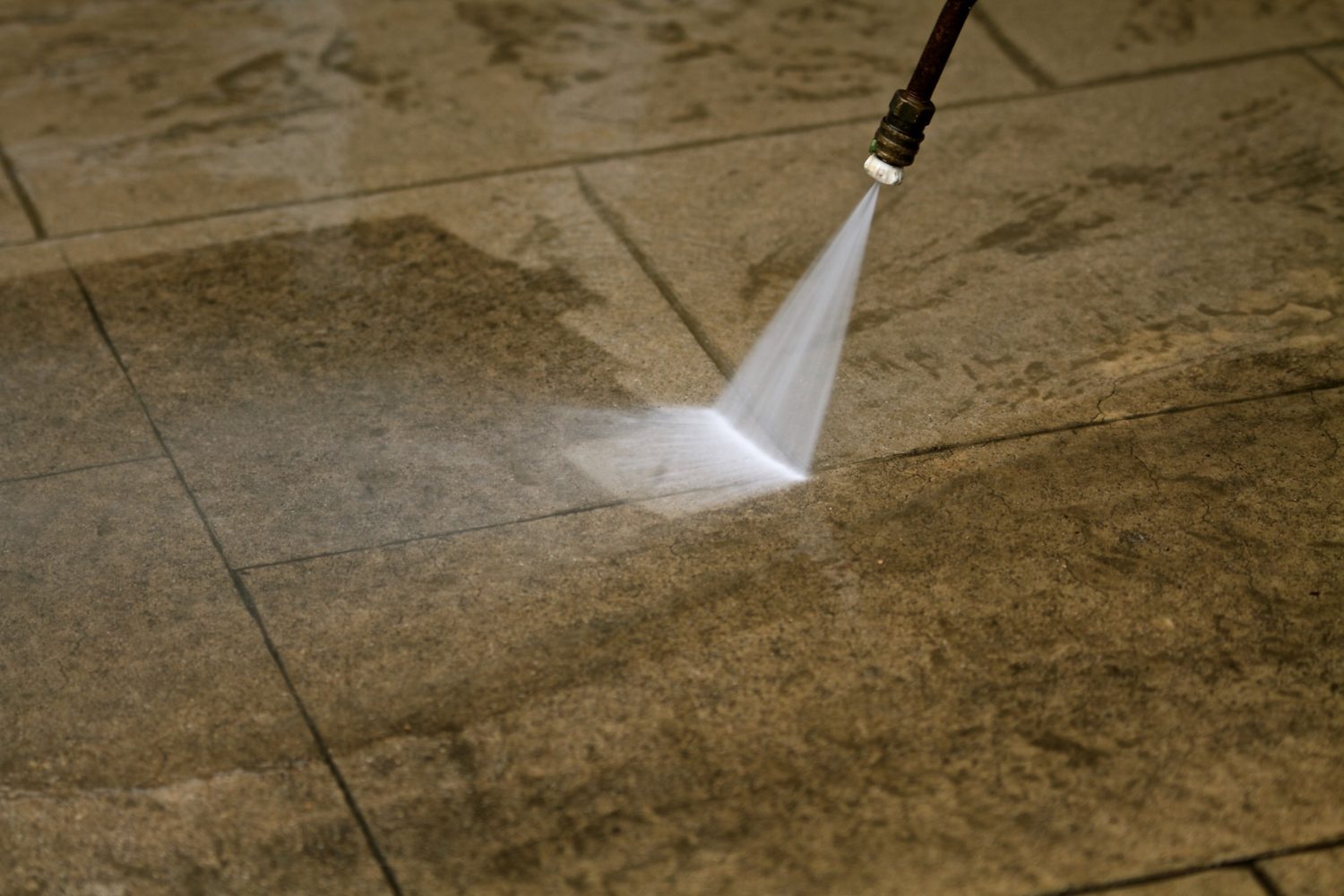
Waterborne Primers & Coatings
Lowers surface tension and improves wetting of damp concrete and dense construction substrates.
0.20–0.70% total wt.Wet-Powder
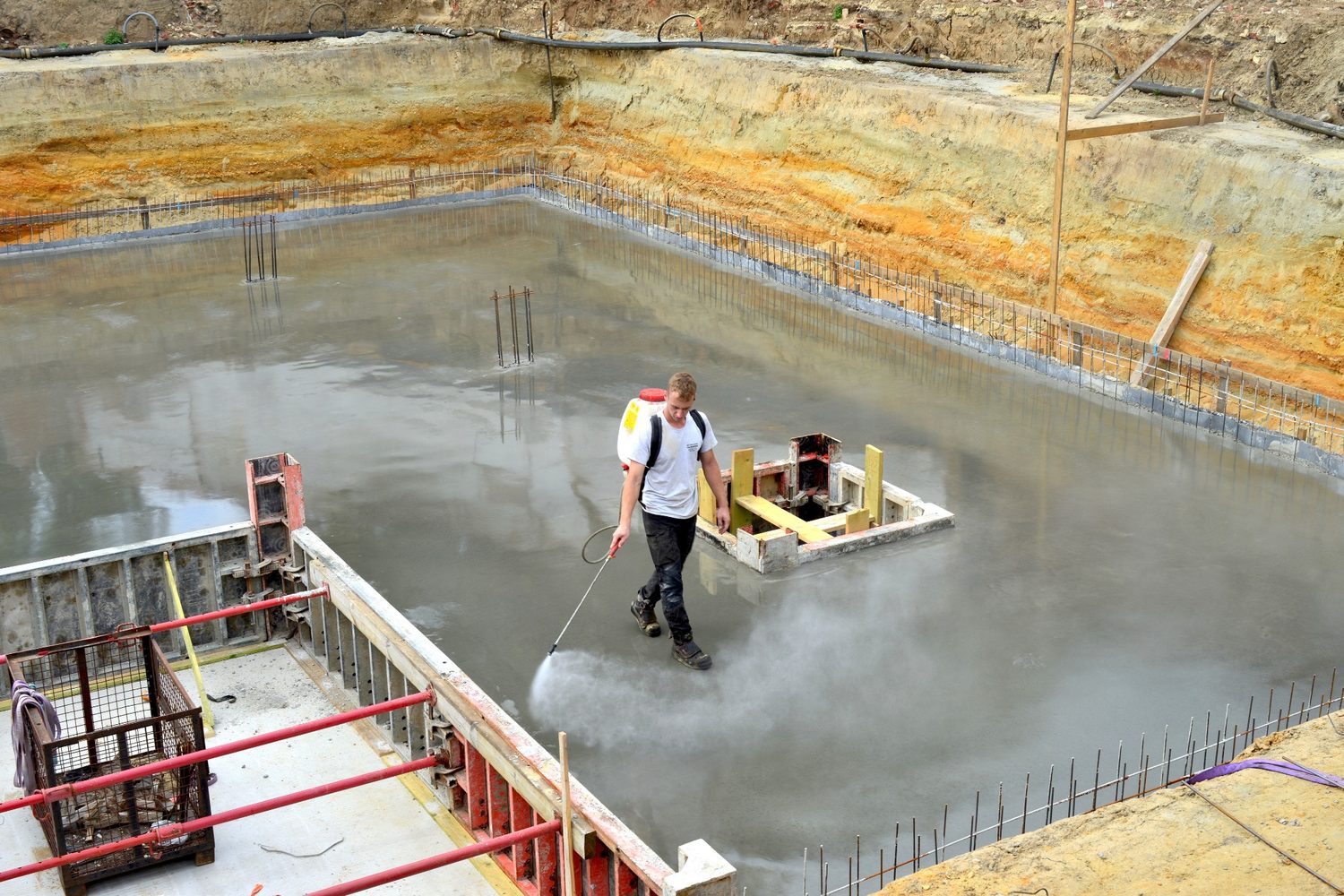
Dry-Mix Grouts & SLU Mortars
Accelerates water wet-out, reduces machine mixing time and helps eliminate lump-core fisheyes.
0.05–0.20% dry wt.Wet-EOPO
Pigment Pastes & Liquid Admixtures
Supports carbon-black and iron-oxide dispersion while avoiding additional foam generation in PCE concrete.
0.50–1.80% on pigmentSystem Engineering
Mortar · Stone · Concrete · Epoxy
Use equilibrium surface tension, dynamic wetting speed, foaming tendency and system compatibility together when selecting the grade.
Trial in final formulation FULL TECHNICAL
DATA
The five-grade comparison below follows the supplied Wetting Agents & Surface-Active Additives TDS.
Selection logic: lower equilibrium surface tension improves spreading potential, but final performance also depends on dynamic wetting, foam tendency, resin/water compatibility and substrate chemistry.

| Parameter | Wet-Powder | Wet-Sil 20 | Wet-EOPO | Wet-Fluoro | Wet-FSil |
|---|---|---|---|---|---|
| Chemical Base | Sulfonated organic on silica carrier | Polyether siloxane emulsion | EO/PO block copolymer | Short-chain fluorosurfactant | Fluoromodified polysiloxane |
| Physical State | Free-flowing white powder | Milky aqueous emulsion | Clear pale liquid | Clear amber solution | Pale clear fluid |
| Active Solids | 50 ±2% | 20 ±1% | ≥99% | 40 ±2% | ≥98% |
| Specific Gravity · 20°C | Bulk 0.35–0.45 g/cm³ | 0.98–1.02 | 1.02–1.06 | 1.08–1.15 | 1.02–1.06 |
| Equilibrium Surface Tension | 28–32 mN/m | 21.5–24 mN/m | 31–34.5 mN/m | 16–18.5 mN/m | 19.5–22 mN/m |
| Dynamic Wetting Speed | Fast in dry mixes | Very high on spray lines | Moderate dynamic drop | Instant capillary action | Ultra-fast film spread |
| Foaming Tendency | Low to neutral | Low / self-controlling | Ultra-low / defoaming | Low to moderate | Non-foaming / deaerating |
| Viscosity · 25°C | Solid <150 μm sieve | 20–120 cP | 350–750 cP | 15–45 cP | 80–250 cP |
| pH | 6.5–8.5 · 10% slurry | 6.5–8.0 | 6.0–7.5 | 5.0–7.0 | Neutral non-aqueous |
| Carrier | Solid matrix | Water · VOC-free | Solvent-free polyether | Water/glycol mix | Solventless fluid |
| Target System | Cement, gypsum, dry grouts | Waterborne acrylics/coatings | Admixtures, PCE, grinds | Epoxy mastic, stone converter | 100% solids epoxy, PU floors |
| Recommended Dosage | 0.05–0.20% dry wt. | 0.20–0.80% wt. | 0.10–0.50% wt. | 0.05–0.25% wt. | 0.10–0.35% wt. |
SEE THE DIFFERENCE IN NUMBERS
Source TDS: Surface Tension + Dynamic Contact Angle
This image is extracted directly from page 2 of the uploaded TDS and shows both the equilibrium surface-tension comparison and dynamic contact-angle wetting kinetics on polished granite.
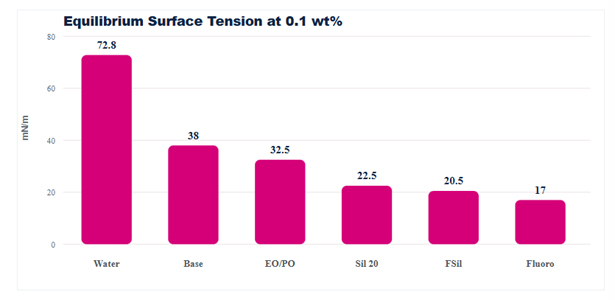
Equilibrium Surface Tension
Numeric comparison reconstructed from the values printed in the supplied TDS performance section.
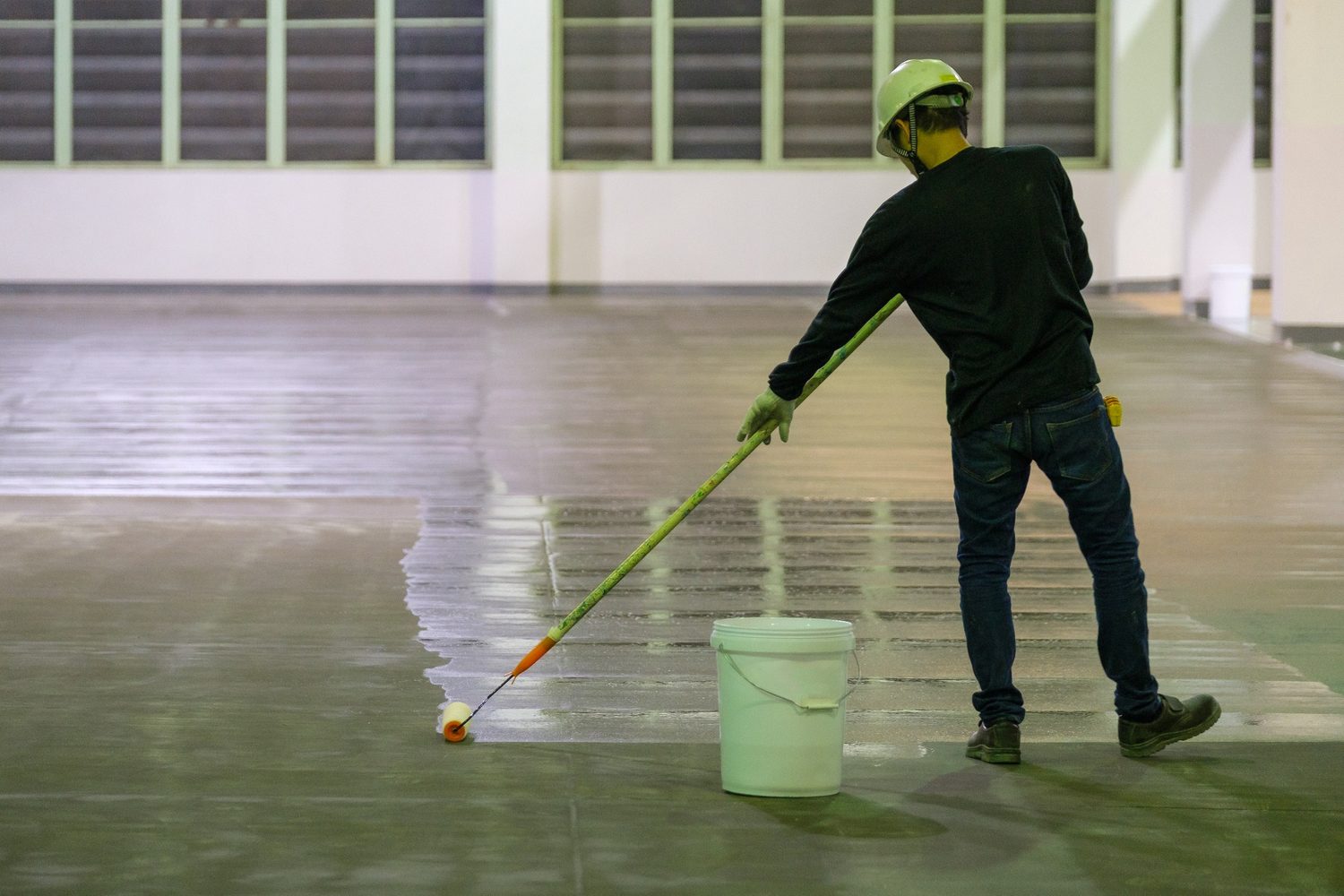
FROM DRY MIX TO STONE RESIN. FROM PRIMER TO FLOOR SCREED.

CONTROL THE ADDITION POINT. VERIFY IN THE FINAL MATRIX.
Stone Resin Protocol
Incorporate Wet-Fluoro or Wet-FSil into Part A epoxy resin before adding hardener.
Capillary Draw Window
The TDS states deep capillary draw into hairline fissures can occur within 30–60 seconds in automated slab-resin lines.
Packaging
Liquid grades: 25 kg pails, 200 kg drums and 1000 kg IBCs. Wet-Powder: 20 kg bags.
Storage
Store between +5°C and +35°C in dry conditions.
Freeze Protection
Wet-Sil 20 must be protected strictly from freezing and maintained above 0°C.
FAQ
Practical wetting-agent guidance aligned to the uploaded TDS.
Need Our Services?
Call: +91 97695 93030
Work Hours
Mon – Sat: 9:00 AM – 6:00 PM IST
Email Us
support@geoconproducts.com